The city’s own numbers

Your sewer bill:
$52 in 2022.
$132 by 2032.

Bellingham is about to spend millions rebuilding 1970s sewage incinerators its own consultants called the most expensive, dirtiest option. There’s a cheaper, cleaner way — and it’s ready today.

Email City Council
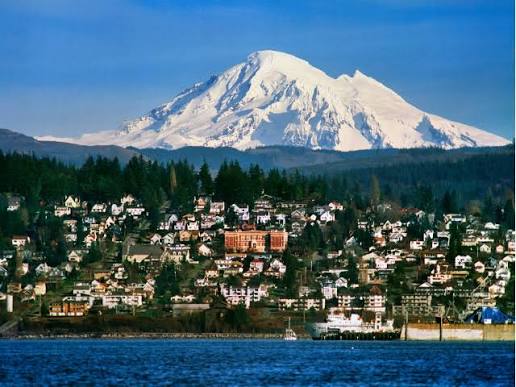
Bellingham's waterfront neighbourhoods below Mount Baker, seen across the bay.

Uh oh..

This could get bad.

Bellingham is poised to invest tens of millions of public dollars in outdated, polluting sludge incinerators—carrying serious cost, health, and environmental risks while ratepayers face 12% annual increases through at least 2027, and potentially through 2032 — even though, safer, less expensive options exist.

The truth

What’s going on?

Bellingham is poised to invest tens of millions of public dollars in outdated, polluting sludge incinerators installed in 1974 to serve a fraction of Bellingham's current growing population. This bandaid solution carries critical cost, health, and environmental risks — even though safer, less expensive options exist.

When sewage is burned at low temperatures, toxic substances like carbon monoxide and persistent industrial chemicals (PFAS) are released into the air. These pollutants don’t disappear, they disperse into our neighborhoods and local waterways. On top of that, utility rates and costs increase on the people of Bellingham’s dime.

All we want.

To listen to previous studies conducted by consultants and choose the cleaner, cheaper, safer solution to sewage management — even temporarily — to give time and budget in the coming years to find a longer term solution.

A cleaner, more affordable solution exists now. Let’s change the course for our community now and future generations.

The truth

Sewage sludge is just garbage with the water still in it.

We already know exactly what to do with garbage — we do it every single day, for every home in Bellingham. Somehow, when our human waste material arrives through a pipe instead of a truck, the city’s current answer is to burn it.

Your garbage

We collect it

Trucks pick it up from every home in town. Routine.

We haul it

It rides to a permitted, engineered facility.

We bury it safely

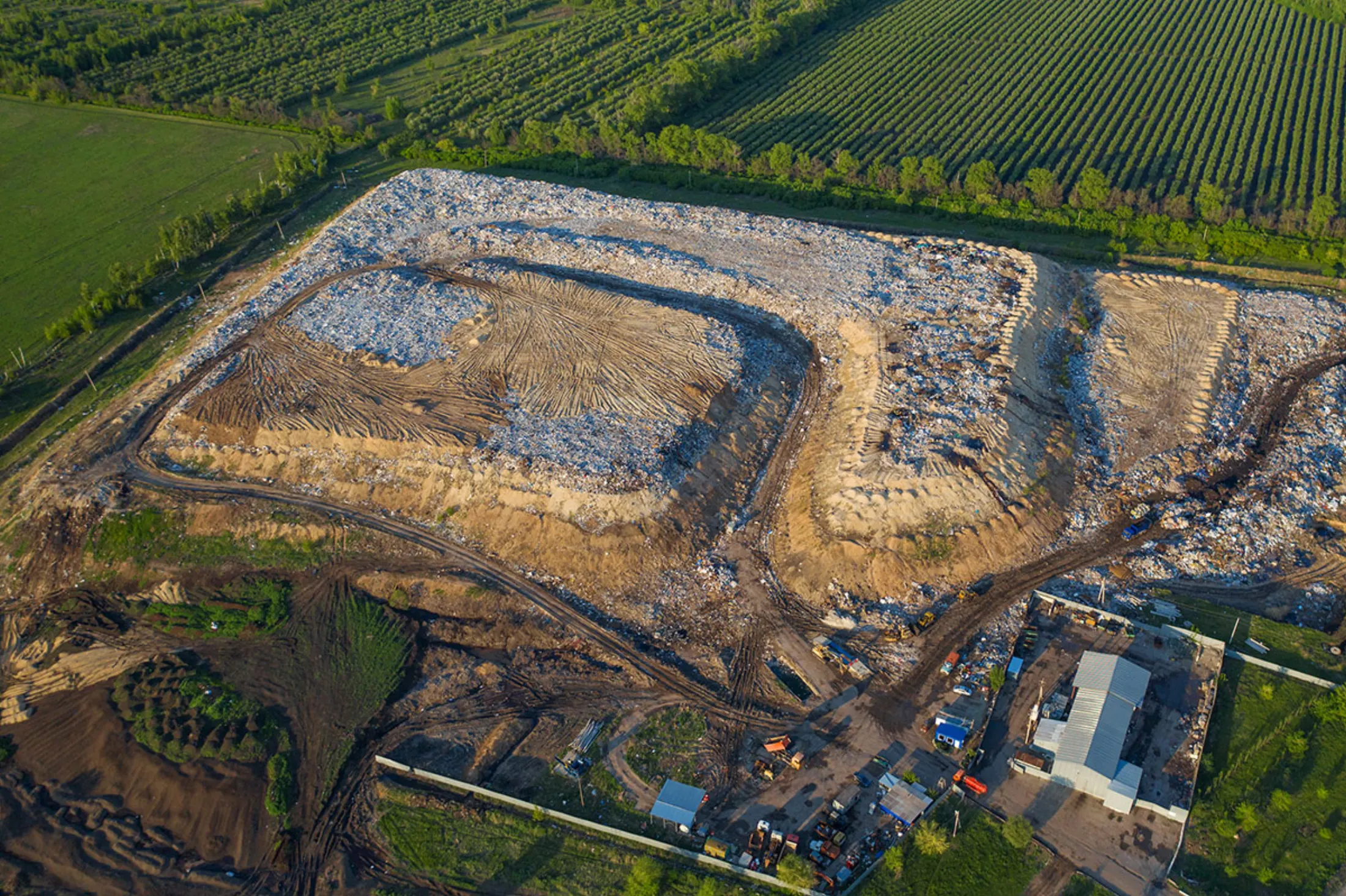
Double-lined Subtitle D landfill. Monitored for decades.

Done

No smoke. No stack. Nobody breathes it.

Handled. Quietly. Every day.

Your sludge

We collect it

Pipes bring it from every home in town. Routine.

We treat it

The plant cleans the water and squeezes out the solids.

Then we set it on fire

In furnaces built in 1974, burning purchased gas.

And you breathe it

What doesn’t burn goes up the stack or out to the bay.

Burned. Over our neighborhoods.

The burn

What incineration actually does

Incineration doesn’t destroy waste. It relocates it. PFAS breaks down at 2,012°F. These furnaces run at 1,140°F with a stack that releases toxic gas that settles back over town. It essentially works like a burn barrel with a giant torch on top to keep the smoke down. That’s what Bellingham has. Everything after incineration is just a question of which exit it takes.

Three exits. All of them end with us.

These furnaces

1,140°F

PFAS breakdown

2,012°F

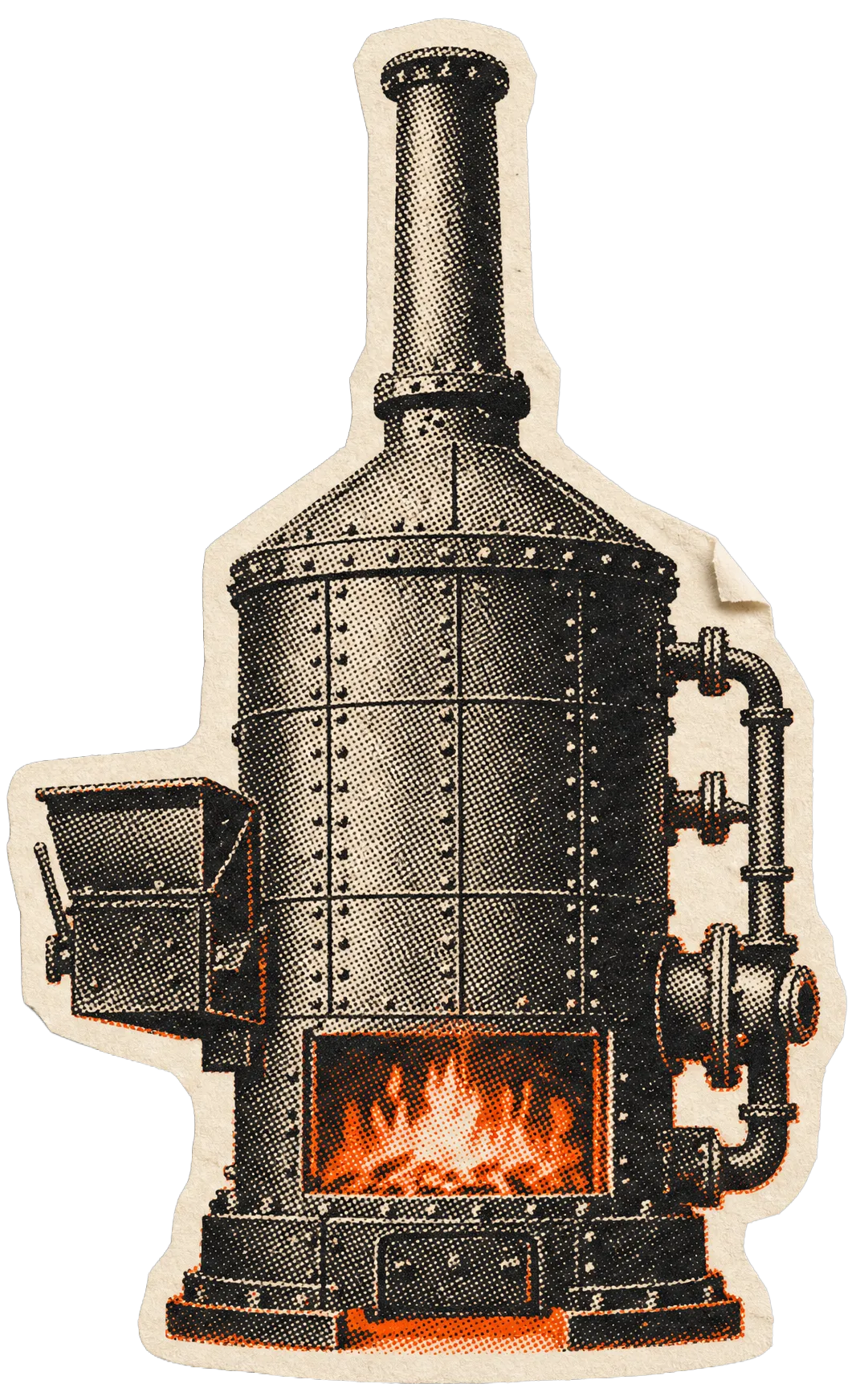
A riveted sludge incinerator with its fire door open.
  • PFAS + Heavy metals into the air

    These furnaces run at ~1,140 F. PFAS destruction takes roughly 2,012 F. What is not destroyed does not disappear; it leaves through the stack, the scrubber water, or the ash. EPA has designated this facility a High Priority Violator under the Clean Air Act since March 2023.

  • Scrubber water to the Bay

    What the scrubbers catch is piped – untreated – in front of the sewage plant into the bay. Biological treatment is not designed to remove heavy metals or dioxins, so what the scrubbers pull out of the air ends up in Bellingham Bay or back in the sludge. In roughly 50 years, this scrubber water has never been tested. The City's own June 2026 design report lists its chemistry as 'to be determined.

  • Gas costs to you

    Billions of BTUs of purchased gas a year, and none of the heat comes back. Upkeep of an outdated system requires millions of dollars in updates just to keep up.

The solution?
A landfill

Landfill history

From then
to now.

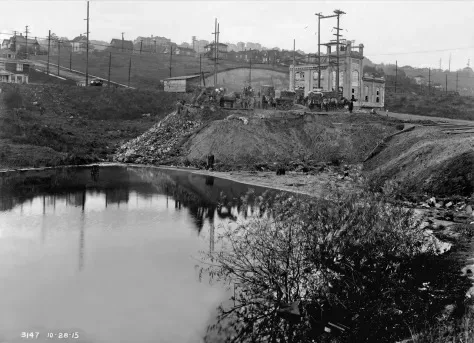
  1. Early 1900s

    Small, open dumps scattered across towns and communities.

    A shoreline dump beside Lake Union, Seattle, in 1915 — refuse tipped down the bank to the waterline below hillside houses.
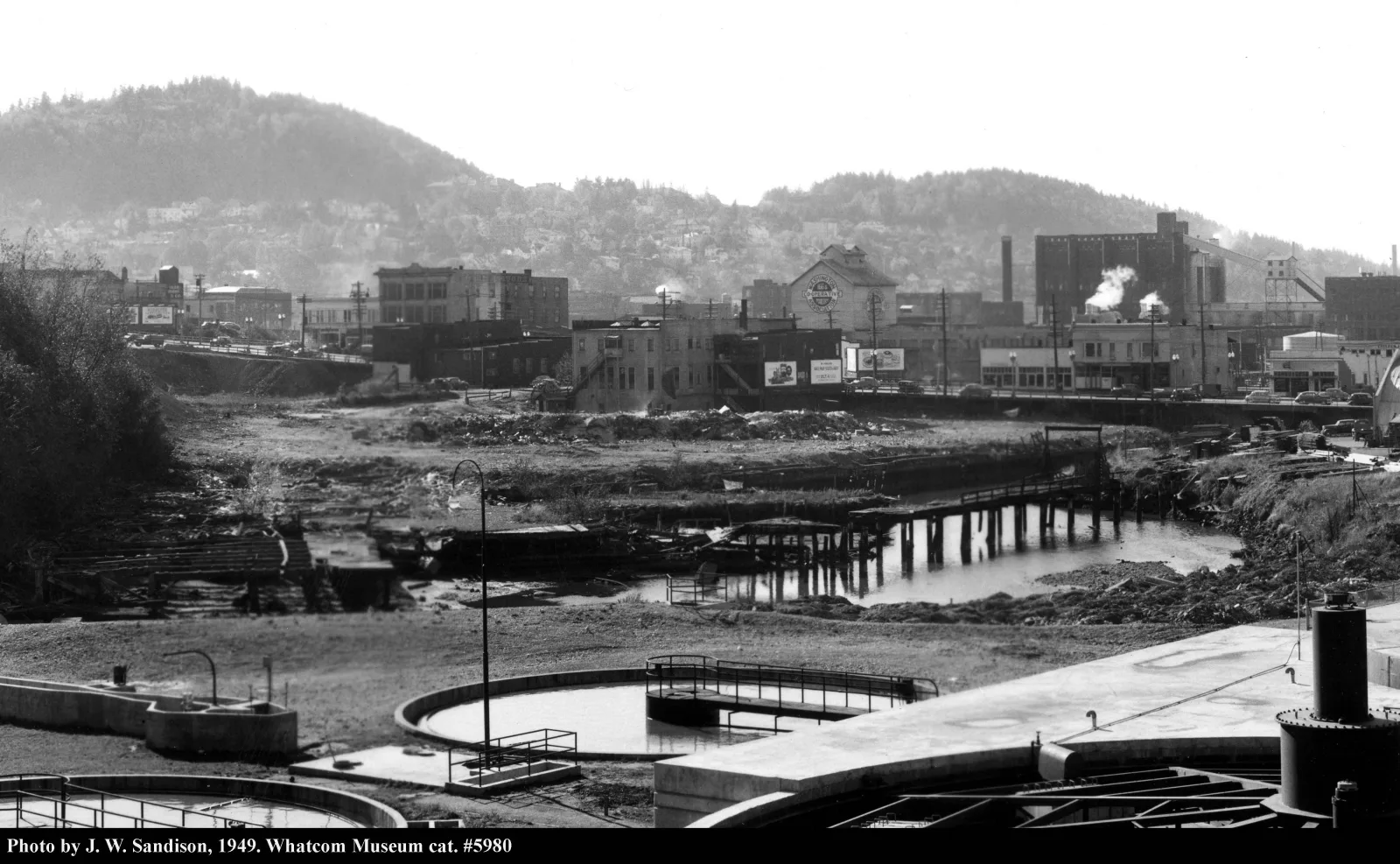
  2. Mid 1900s

    More sanitary landfills are introduced; local at scale.

    Bellingham's Holly Street dump in 1949, refuse spread across the tideflats below the downtown waterfront.
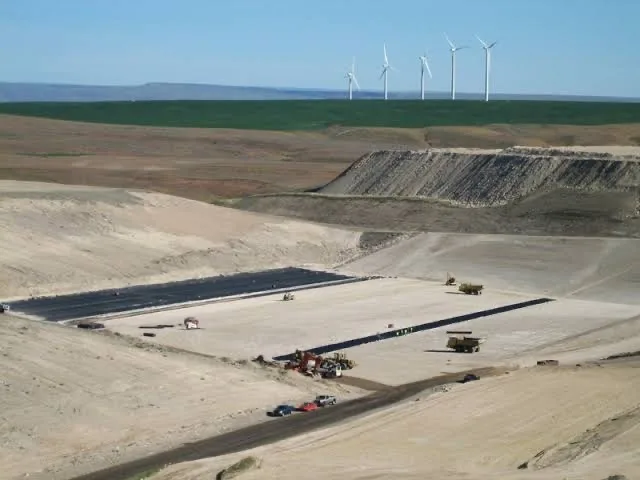
  3. 1970 – today

    EPA push for stronger environmental regulations; large regional landfills that are heavily regulated.

    An engineered cell under construction at the Columbia Ridge Landfill, its liner exposed beneath wind turbines on the ridge.

Yes indeed.
Here is why.

A modern landfill is a heavily regulated system, complete with base floors and landfill gas collection systems to capture harmful gases as they fill.

Landfills are

Double lined

A double-lined engineered composite liner system keeps leachate & contaminants from escaping the landfill and allows for leachate collection & treatment.

Leachate collection

Leachate is collected and managed on-site under permit, instead of being sent up a smokestack over a city.

Gas capture

Decomposing organic waste generates roughly 50% methane and 50% CO2 — this is captured through an intricate gasification system.

What’s the point? An available, affordable, regulated solution now

Temporarily landfilling, rather than patching together outdated systems that will not keep up with growth and regulations, offers a solution now that allows us to put our time and money in better solutions and minimize our health risk.

If you’ve read this far,you already know.

The City still hasn’t committed to stopping a $60 million upgrade of the aging incinerators. City Council hears it when constituents write in.

Email City Council

The letter’s already written. Add your name and send.

You were asked.
You answered.

  1. What happens after the flush?

    Follow Bellingham’s wastewater from our homes to Post Point, where solids are separated and ultimately burned through incineration.

    Explore What happens after the flush?

Join the cause.

The City has received 65 proposals to upgrade the Post Point incinerators, and no one has said when a contract could be approved. Ask City Council to withhold approval, shut the incinerators down, and use landfilling as the bridge to a cleaner solution.

Clean. Bellingham. Now.

Email City Council